SeaInside: real estate agency
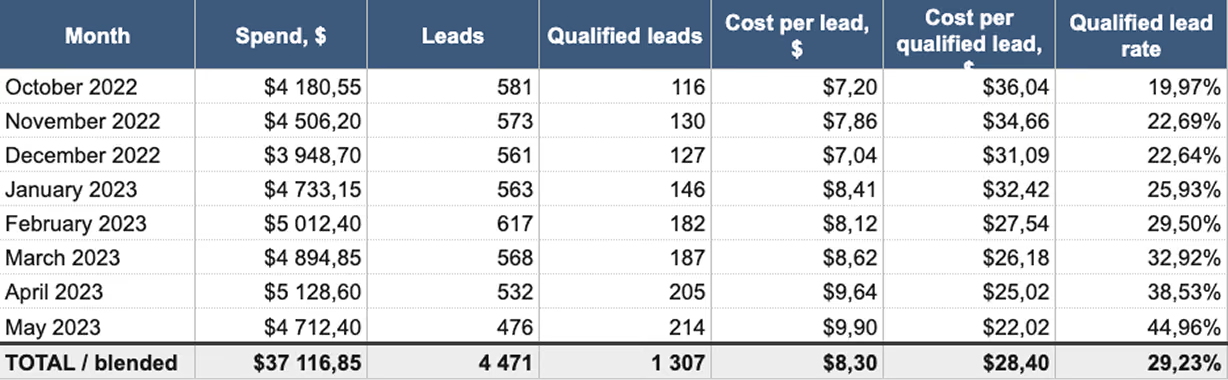
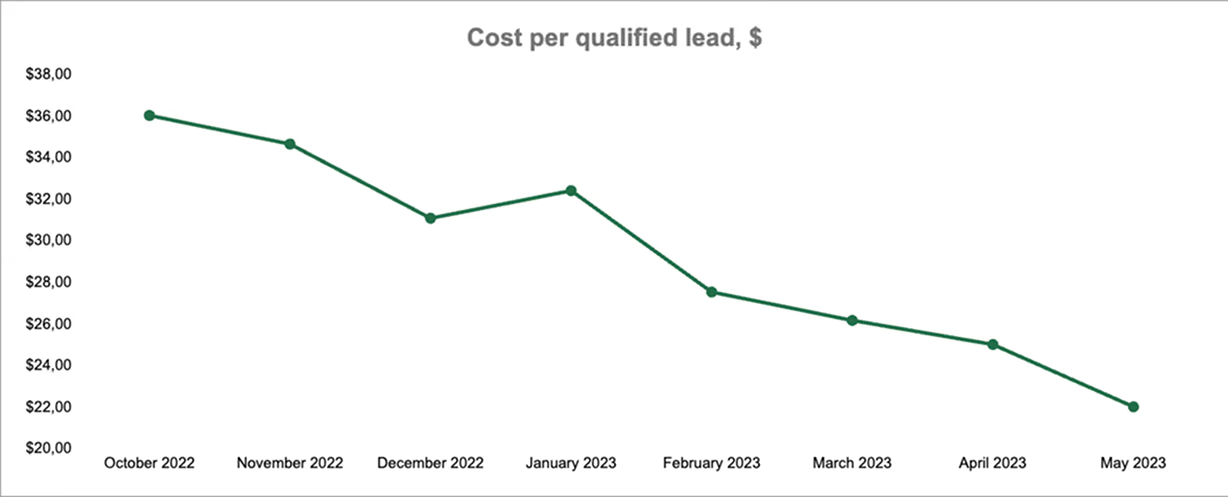
Contextual ads in Georgia had run to $450 to $500 per qualified lead. I rebuilt acquisition on content across eight channels plus video creative in Meta, testing creatives rather than audiences, and let the raw cost per lead rise so the qualified one could fall: $36 to $22, lead quality 20% to 45%.
- Client
- SeaInside, real estate agency, Tbilisi
- Role
- Social Media Manager
- Period
- Oct 2022 – May 2023
- Channels
- Instagram RU, Instagram EN, YouTube, Dzen, VK, Telegram, client pages, partner pages
- Languages
- Russian, English

The problem
By the summer of 2022 a qualified lead from contextual advertising in Georgia cost $450 to $500. Demand for contextual advertising had gone up across the market and the auction went with it, which put the agency's whole pipeline on a channel that was pricing itself out. The job was to replace it with qualified leads coming from content and paid social, on a market where the audience for waterfront property is small enough that you cannot simply buy more of it.
Results
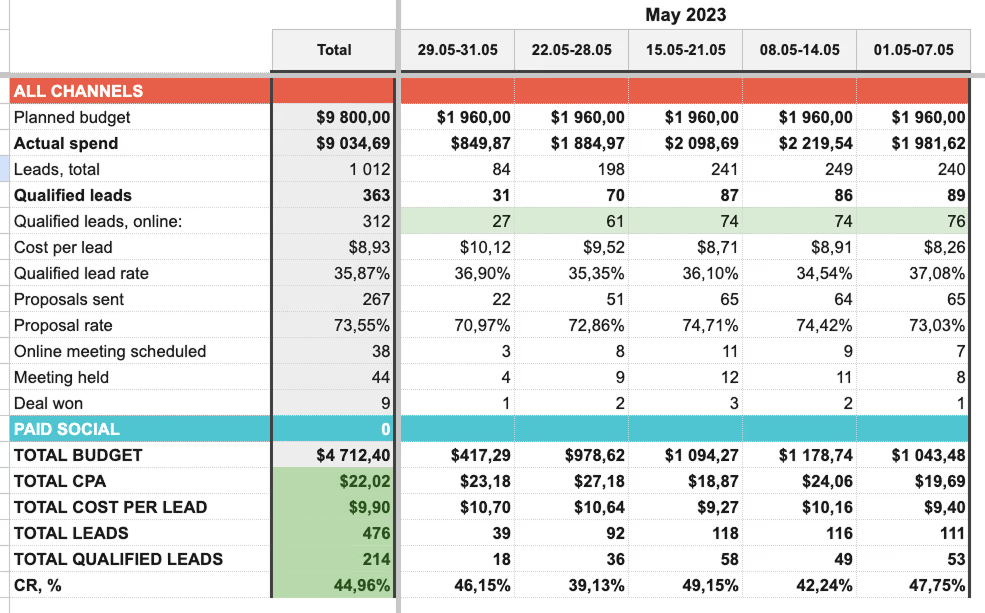
Paid social replaced contextual as the main source of qualified leads, at a twentieth of what context was charging for one. The numbers turned in January 2023, once the content strategy changed.
- Cost per qualified lead, down 39%
- $36 → $22Cost per qualified lead, down 39%
- Qualification rate
- 20% → 45%Qualification rate
- Weekly reach, 2,900 to 54,000
- ×19Weekly reach, 2,900 to 54,000
- Raw cost per lead was allowed to rise from $7.20 to $9.90: the point was better leads, not cheaper ones
- 2.5M views over the period, with a best week of 277,000
- Engagement rate across the account went from 3.9 to 5.8
- Organic enquiries up 23%, and a Telegram showcase built from nothing to 2,400 subscribers
What I did
- 01
Priced the channel that was failing
Context at $450 to $500 per qualified lead was not a bidding problem, it was a channel problem. Naming that number was what made the case for moving the budget rather than optimising inside a losing auction.
- 02
Rebuilt acquisition around video creative
Meta paid social with video creative and A/B testing on the creative itself rather than the audience. Property is a slow purchase, and video is the only format that answers the questions a static ad leaves open.
- 03
Bought worse-looking leads on purpose
Raw cost per lead went from $7.20 to $9.90, up 37%, because the targeting and the creative were tuned to filter rather than to attract. The qualification rate went from 20% to 45%, so the cost of a lead the sales team could actually work fell to $22.
- 04
Ran eight channels in parallel
Instagram in Russian and English, YouTube, Dzen, VK, a Telegram showcase, plus client and partner pages. In a market this size no single channel holds enough audience, and each one reaches a buyer the others do not. Telegram carried the lowest-friction path of the set: browse the listings, ask a question, no call required.
The visual system






Takeaway
The move that mattered was counterintuitive: letting the headline cost per lead rise 37% while the cost of a qualified one fell 39%. Optimising for the cheaper number would have kept the pipeline full of leads the sales team could not close.